Coolant leak, whining noise, or overheating? Here’s how to spot a failing water pump on a diesel truck before it leads to a bigger cooling system problem.
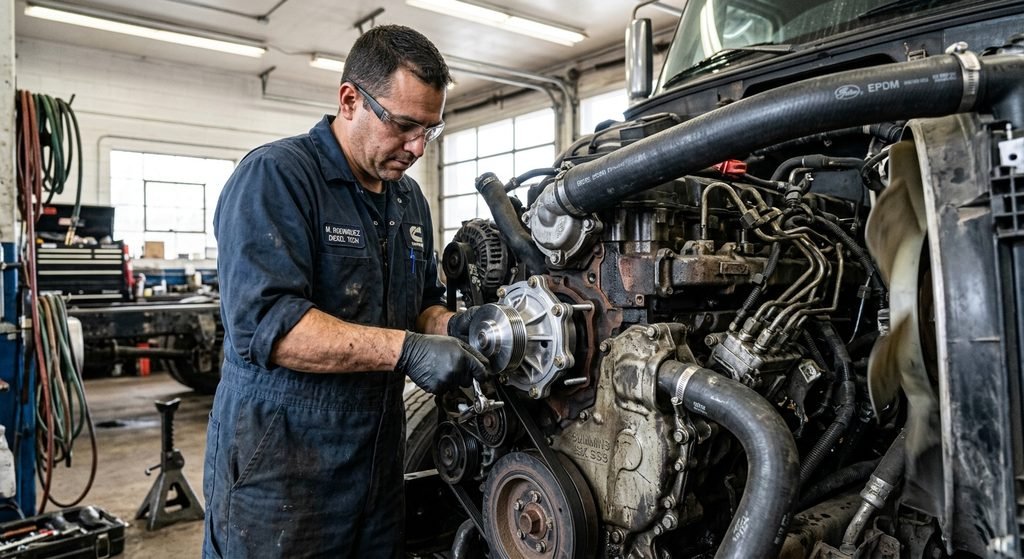
The water pump is one of those parts that doesn’t get much attention until it fails, and when it does, it can happen gradually with warning signs or, in some cases, fairly suddenly. Since the water pump is responsible for circulating coolant through the engine, a failure here can lead to overheating fast if it’s not caught early.
This guide covers the common symptoms of a failing water pump, what typically causes it to wear out, and how to tell whether you’re dealing with a water pump issue or a different cooling system problem.
What a Water Pump Actually Does
The water pump circulates coolant through the engine block, cylinder head, radiator, and heater core, keeping the engine at a consistent operating temperature. It’s typically driven by the serpentine belt or, on some diesel engines, gear-driven off the timing system. The pump relies on an internal bearing and seal to keep coolant contained while the impeller spins, and both of these are common wear points.
Common Symptoms of a Failing Water Pump
Coolant leak near the front of the engine. A leak from the water pump area, often visible as coolant residue or drips below the pump housing, is one of the more common signs of a failing seal.
Whining or grinding noise from the front of the engine. A failing water pump bearing can produce a noise that changes with engine RPM, often most noticeable at idle.
Engine overheating. If coolant isn’t circulating properly due to a failing pump or impeller, the engine can overheat, especially under load or in stop-and-go traffic.
Wobble or play in the pump pulley. On belt-driven pumps, a worn bearing can sometimes be felt as play when you try to wiggle the pulley by hand with the engine off.
Steam from under the hood. In more advanced failures, a leaking water pump can cause enough coolant loss to produce visible steam, particularly noticeable after the truck has been running.
Discolored or low coolant with no other visible leak. If coolant levels keep dropping and there’s no leak elsewhere, the water pump is worth checking, since some leaks are small and only show up under pressure or heat.
Squealing belt noise. While this can point to several different issues, a seized or nearly-seized water pump can sometimes cause belt slip and a squealing noise.
Since several of these symptoms overlap with other cooling system issues like a bad thermostat, radiator, or hose, confirming the water pump specifically usually involves a visual inspection alongside a cooling system pressure test.
What Causes Water Pumps to Fail
- Bearing wear over time. Like any component with moving parts, the internal bearing wears down with mileage and eventually fails.
- Seal degradation. The seal that keeps coolant contained can dry out or wear over time, leading to leaks even if the bearing is still fine.
- Contaminated or old coolant. Coolant that’s overdue for a flush can become corrosive and accelerate wear on the pump’s internal components.
- Impeller damage or corrosion. In some cases, the impeller itself can corrode or become damaged, reducing how effectively it circulates coolant even if the pump still spins.
- Belt tension issues. Excessive or uneven belt tension can put extra stress on the water pump bearing and shorten its life.
How to Confirm a Water Pump Problem
- Visual inspection for leaks. Checking around the pump housing and weep hole (if equipped) for coolant residue is often the first step.
- Check for bearing play or noise. With the engine off and belt removed, checking for play in the pulley or spinning it by hand to feel for roughness can help confirm bearing wear.
- Cooling system pressure test. This can help identify whether the water pump is the source of a leak versus another component in the cooling system.
- Listen with the engine running. A stethoscope or long screwdriver held near the pump housing can sometimes help isolate bearing noise from other engine noises.
Repair Considerations
Water pump replacement is a fairly common maintenance item, and on many diesel engines, it’s accessible without major disassembly, though this varies by engine and whether the pump is belt-driven or gear-driven internally. Because the pump is a wear item, some owners choose to replace it proactively during other timing or belt-related service, especially on engines where accessing it later requires significant additional labor.
Using coolant that matches the manufacturer’s specification after a water pump replacement matters too, since mixing incompatible coolant types can cause corrosion issues that shorten the life of the new pump.
Common Mistakes to Avoid
- Ignoring a small coolant leak because it “isn’t that bad yet,” which can lead to a sudden failure and overheating at an inconvenient time.
- Replacing the water pump without also replacing the thermostat if it’s original and old, since it’s a low-cost item to address while already in that area.
- Reusing old, degraded coolant when performing the replacement instead of flushing the system.
- Not checking belt tension and pulley alignment after installing a new pump.
Frequently Asked Questions
Can I drive with a leaking water pump?
Short distances may be possible, but a leaking water pump can worsen quickly and lead to overheating, so it’s best to have it addressed as soon as you notice a leak.
What does a bad water pump sound like?
Often a whining or grinding noise from the front of the engine that changes with RPM, sometimes accompanied by belt squealing if the pump has seized.
How long do diesel truck water pumps typically last?
This varies by engine, driving conditions, and coolant maintenance history, so rather than a fixed mileage, it’s best to watch for the symptoms above.
Is a coolant leak always the water pump?
No. Hoses, the radiator, thermostat housing, and heater core can all leak too, so a proper inspection helps confirm the actual source before replacing parts.
Should I replace the thermostat when replacing the water pump?
Many owners do, since it’s a low-cost item and the cooling system is already open, but it’s not strictly required unless the thermostat is also showing signs of failure.
What happens if a water pump fails completely while driving?
The engine can overheat fairly quickly since coolant stops circulating, so it’s important to pull over and shut off the engine if you notice a sudden temperature spike.
Final Thoughts
A failing water pump rarely fails without some warning, whether that’s a small leak, a bearing noise, or gradual overheating. Catching it early usually means a straightforward replacement instead of an overheating incident on the side of the road.
Browse our WATER PUMP CATEGORY for replacement options, or check our BEARINGS CATEGORY for related parts. For help confirming fitment, Contact Us so we can walk you through what info you’ll need.