If your diesel has started idling rough, using more fuel than it used to, or making a knocking sound that wasn’t there before, a failing fuel injector is one of the first things worth checking. Injectors on a diesel engine work under a lot more pressure than what you’d find in a gas engine, and once they start to go bad, the symptoms usually show up fast and keep getting worse. Waiting it out rarely helps and can end up costing more in the long run.
This guide covers the real symptoms of a failing injector, what tends to cause them to fail, how to figure out which cylinder is the problem, and when it actually makes sense to replace one instead of trying to clean or rebuild it.
How Diesel Fuel Injectors Work
A diesel injector’s job is to atomize fuel at very high pressure and deliver it straight into the combustion chamber at a precise moment. On common rail systems, that pressure can run past 20,000 PSI. Since diesel engines rely on compression to ignite fuel rather than a spark plug, injector timing and spray pattern matter a lot more than they do on a gasoline engine. Even a small issue, like a partially clogged nozzle or a worn solenoid, can throw off combustion in that one cylinder and affect how the whole engine runs.
Common Symptoms of a Bad Diesel Injector
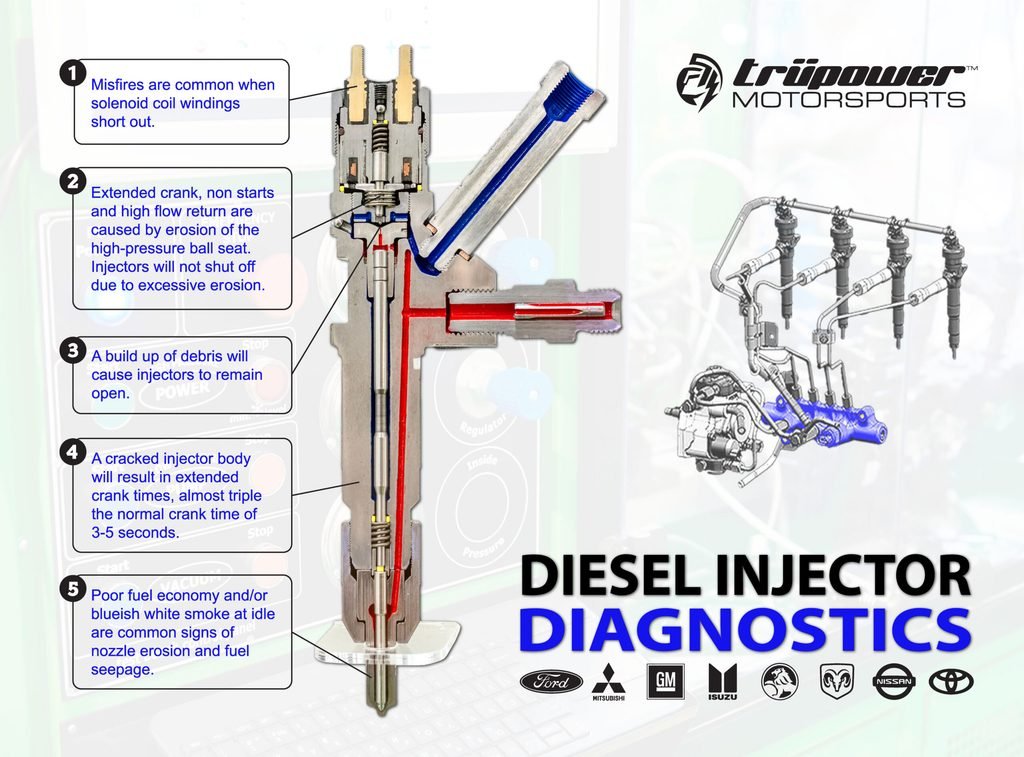
Rough or uneven idle. A failing injector often causes the engine to shake or “miss” at idle because one cylinder isn’t firing the way it should. This is usually one of the earliest signs.
Engine knocking or ticking. A misfiring or leaking injector can cause a knock that sounds different from normal diesel clatter. It’s often more pronounced at idle and may change with engine load.
Hard starting. If an injector isn’t delivering fuel correctly, the engine may crank longer than normal before it catches, especially in cold weather.
Excessive smoke. Black smoke usually points to too much fuel being delivered. White smoke can mean unburned fuel or a timing issue. Both are worth investigating rather than ignoring.
Poor fuel economy. A leaking or improperly atomizing injector wastes fuel, and drivers often notice a drop in MPG before anything else changes.
Loss of power or hesitation. If the truck feels sluggish under load or hesitates when you accelerate, uneven fuel delivery across cylinders is a common cause.
Check engine light with misfire or fuel trim codes. Codes like P0201 through P0206 (injector circuit codes) or fuel trim codes are common indicators, though they don’t always point to a specific injector without further testing.
Fuel smell or visible leaks. A cracked injector body or worn O-ring can allow fuel to seep out, which is both a performance and a safety concern.
Not every symptom above is a guaranteed injector problem. Rough idle can also come from glow plug issues, and smoke can point to turbo or EGR problems too. That’s part of why proper diagnosis matters before replacing parts.
What Causes Diesel Injectors to Fail
Injectors don’t usually fail without a reason. A few of the more common causes include:
- Contaminated fuel. Water, dirt, or debris in the fuel system can wear down injector internals over time.
- Age and mileage. Injectors are wear items. High-mileage engines are more likely to have one or more injectors nearing the end of their service life.
- Carbon buildup. Over time, carbon can accumulate around the injector tip and affect spray pattern.
- Poor fuel quality. Low-quality or low-lubricity diesel fuel can accelerate wear on injector components.
- Electrical issues. On common rail systems, a failing solenoid or wiring problem can cause an injector to misfire even if the mechanical parts are fine.
How to Narrow Down Which Injector Is Failing
Before ordering a replacement, it helps to confirm which cylinder is actually causing the issue. A few common approaches:
- Cylinder cutout test. Disconnecting one injector at a time (or using a scan tool to do this electronically) while the engine idles can show which cylinder makes the least difference when disconnected, often pointing to the weak one.
- Scan tool data. Many diesel scan tools can show injector correction or balance rates, which flag injectors that are compensating more than others.
- Visual inspection. Checking for fuel leaks, carbon buildup, or damage around each injector can sometimes confirm the problem without electronic testing.
- Injector flow testing. For a more precise answer, injectors can be bench tested to compare flow rates and spray pattern.
Since fitment and testing procedures vary by engine (Cummins, Duramax, Power Stroke, and others all have different injector types and diagnostic steps), it’s worth checking your specific engine’s service information or working with a diesel technician if you’re not confident diagnosing it yourself.
Repair, Rebuild, or Replace?
Depending on the type of injector and the extent of the damage, you may have a few options:
- Cleaning can sometimes resolve minor carbon buildup issues, though it won’t fix mechanical or electrical failures.
- Rebuilding is common for certain injector types and can be a cost-effective option compared to buying new.
- Replacement is usually the right call when an injector has failed electrically, is leaking, or has significant wear.
Because injectors are precision components, it’s important to confirm the exact part number or OEM specification for your engine before ordering a replacement. Two engines with the same displacement can still use different injectors depending on model year and configuration, so verifying with your VIN or engine code is worth the extra few minutes.
Common Mistakes to Avoid
- Replacing all injectors at once without confirming which ones are actually bad, which can get expensive unnecessarily.
- Assuming rough idle is always an injector problem without ruling out glow plugs, air intake issues, or EGR problems first.
- Installing injectors without properly bleeding the fuel system afterward, which can cause hard starting even with good parts.
- Using injectors that aren’t verified for your specific engine and model year.
Frequently Asked Questions
How much does it cost to replace a diesel fuel injector?
Cost varies a lot depending on the engine, injector type, and whether you’re doing the work yourself or having a shop do it. Because pricing changes by vehicle and injector type, it’s best to check current pricing for your specific engine rather than relying on a general estimate.
Can you drive with a bad diesel injector?
You can often drive short distances, but a failing injector tends to get worse over time and can lead to more expensive damage, including to the cylinder or catalytic system, if left unaddressed for too long.
How long do diesel injectors typically last?
This depends heavily on the engine, fuel quality, and maintenance history. Rather than a fixed mileage number, it’s more useful to watch for the symptoms above and address issues as they appear.
Do all diesel injectors use the same part number?
No. Injector part numbers vary by engine make, model, and often by model year. Always confirm fitment using your VIN or engine code before ordering.
Can bad fuel cause injector failure?
Yes. Contaminated or low-quality fuel is one of the more common contributors to premature injector wear, which is part of why fuel filtration and fuel quality matter for injector lifespan.
Should I replace injectors myself or have a professional do it?
This depends on your comfort level and the tools available. Common rail injectors in particular often require specific torque procedures and sometimes coding after installation, so if you’re not familiar with the process, having a diesel technician handle it can help avoid comebacks.
Final Thoughts
A failing diesel injector rarely fixes itself, and catching the symptoms early usually means a simpler, less expensive repair. If you’re noticing rough idle, smoke, or a drop in fuel economy, it’s worth running a proper diagnosis before assuming which injector (or how many) actually need replacing.
If you’re ready to look at replacement options, browse our Fuel Injectors Category, or check our Engine Parts Category, for related components. For help confirming fitment, Click Here so we can walk you through what info you’ll need.