Ticking noise, rough idle, or loss of power? Here’s how to spot a worn or failing camshaft in a diesel engine and what usually causes the damage.
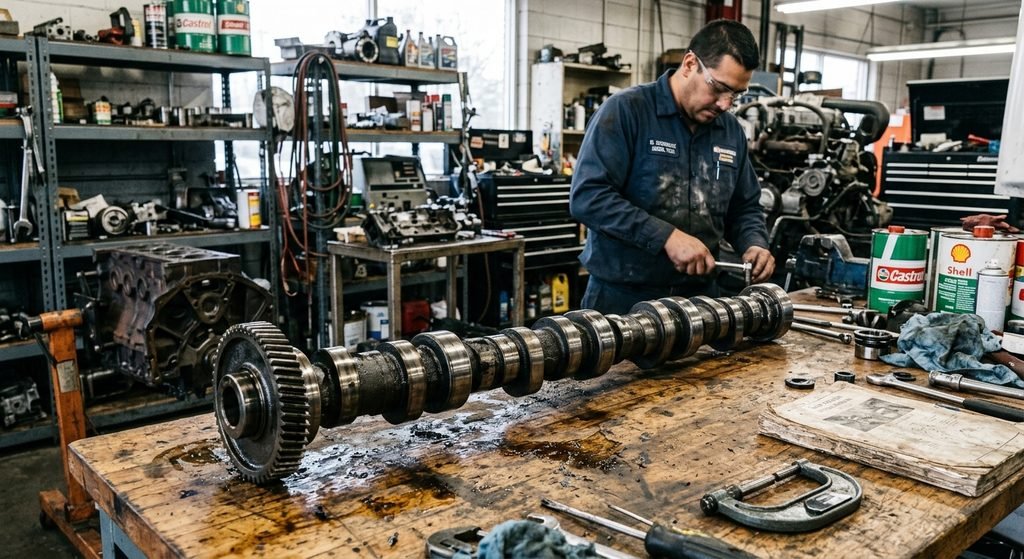
The camshaft controls when the intake and exhaust valves open and close, which makes it a critical part of how well a diesel engine runs. Camshaft wear tends to develop gradually, often starting with a lobe that’s worn slightly flat, and if it’s not caught early, it can affect an entire cylinder’s performance or, in some cases, lead to more extensive valve train damage.
This guide covers the symptoms of a worn or failing camshaft, what typically causes it, and how to confirm the diagnosis before deciding on a repair.
What a Camshaft Actually Does
The camshaft has a series of lobes, one or more for each valve, that push against lifters or rocker arms to open the intake and exhaust valves at precise times relative to piston position. It’s typically driven by a timing chain, belt, or gear set connected to the crankshaft, keeping valve timing synchronized with piston movement. Camshaft lobes rely on proper lubrication and, in many cases, correct break-in procedures to avoid premature wear.
Common Symptoms of a Bad Camshaft
Ticking or tapping noise from the engine. A worn cam lobe or lifter can produce a rhythmic ticking noise, often more noticeable at idle and sometimes changing with RPM.
Rough idle or misfire. If a cam lobe has worn down significantly, the affected valve won’t open as far or as long as it should, which can cause that cylinder to run poorly or misfire.
Loss of power, especially at higher RPM. Since camshaft profile affects how efficiently the engine breathes, a worn lobe can noticeably reduce power output, particularly noticeable under load or at higher RPM.
Check engine light with a misfire code. A persistent misfire code on a specific cylinder, especially one that doesn’t resolve with typical fixes like new glow plugs or injectors, can point toward a camshaft or valve train issue.
Metal shavings in the oil. In more advanced camshaft wear, metal debris from a worn lobe can show up in the oil or on a magnetic drain plug.
Reduced fuel economy. Poor valve timing from cam wear can affect combustion efficiency, leading to a drop in MPG.
Unusual valve train noise on startup. Some camshaft or lifter issues are more noticeable right after a cold start before settling down as oil pressure builds.
Since ticking noises can also come from exhaust leaks, injectors, or lifters unrelated to the camshaft itself, narrowing down the actual source usually requires more than just listening.
What Causes Camshaft Wear or Failure
- Inadequate lubrication. Insufficient oil flow to the camshaft and lifters, whether from low oil level, a failing oil pump, or a clogged passage, accelerates wear significantly.
- Improper break-in. Especially relevant with aftermarket or reground camshafts, skipping proper break-in procedures can cause premature lobe wear.
- Contaminated oil. Dirt or debris in the oil can act abrasively against the cam lobes and lifters over time.
- Extended oil change intervals. Oil that’s overdue for a change loses some of its protective properties, which matters a lot for camshaft longevity.
- Weak valve springs. In some cases, valve springs that have lost tension can contribute to increased lobe wear due to improper lifter contact.
- Normal wear over high mileage. Even with good maintenance, camshafts are wear items and eventually show wear over a long service life.
How to Confirm Camshaft Wear
- Listen for location-specific noise. A mechanic can sometimes narrow down whether a ticking noise is coming from a specific area of the valve train.
- Compression or leak-down test. While this primarily checks piston rings and valves, unusual results on a specific cylinder can sometimes point toward a valve timing issue related to cam wear.
- Visual inspection. Once the valve cover is removed, cam lobes can be visually inspected for flat spots, pitting, or scoring.
- Lobe lift measurement. Using a dial indicator to measure actual lobe lift and comparing it to specification is one of the more definitive ways to confirm wear.
Repair Considerations
Camshaft replacement typically requires removing the valve covers and, depending on the engine design, potentially the timing cover or intake components to access the camshaft. Because of the labor involved in accessing the valve train, many owners choose to replace lifters, and in some cases valve springs, at the same time, since reusing worn lifters with a new camshaft can lead to premature wear on the new cam.
If you’re considering an aftermarket or performance camshaft rather than a stock replacement, it’s worth confirming compatibility with your specific engine’s other components, since camshaft changes can affect how the engine runs with stock injectors, turbo sizing, and tuning.
Common Mistakes to Avoid
- Installing a new camshaft with old, worn lifters, which is a common cause of rapid new-cam failure.
- Skipping proper break-in procedures on a new or reground camshaft.
- Ignoring a persistent ticking noise, assuming it will go away, when it may indicate ongoing wear that gets worse over time.
- Not addressing an underlying oil pressure or contamination issue that may have caused the original camshaft to wear prematurely.
Frequently Asked Questions
What does a bad camshaft sound like?
Often a ticking or tapping noise from the engine, particularly noticeable at idle, though the exact sound can vary depending on which lobe or lifter is affected.
Can a worn camshaft cause a misfire?
Yes. If a cam lobe is worn enough to significantly reduce valve lift, the affected cylinder may not fill or exhaust properly, leading to a misfire or rough running on that cylinder.
How long do diesel camshafts typically last?
This depends heavily on maintenance history, oil quality, and driving conditions, so rather than a fixed mileage, it’s more useful to watch for the symptoms above.
Do I need to replace lifters when replacing a camshaft?
In most cases, yes, especially if the lifters have been run against a worn cam lobe, since reusing them can cause the new camshaft to wear prematurely.
Can bad oil cause camshaft wear?
Yes. Since camshaft lobes depend on consistent lubrication, dirty or degraded oil is one of the more common contributors to premature wear.
Is a ticking noise always a camshaft problem?
Not always. Exhaust leaks, injectors, and other valve train components can produce similar noises, so a proper diagnosis helps confirm the actual source.
Final Thoughts
Camshaft wear tends to develop slowly, and catching the early signs, particularly a new ticking noise or a stubborn misfire, can help you address it before it affects more of the valve train. If something sounds off under the valve cover, it’s worth having it checked rather than waiting.
Browse our CAMSHAFT CATEGORY for replacement options, or check our Engine Parts Category for related components. For help confirming fitment, Our Experts can walk you through what info you’ll need.