Blue smoke, low compression, or excessive oil use? Here’s how to spot worn pistons or piston rings in a diesel engine before it turns into a bigger repair.
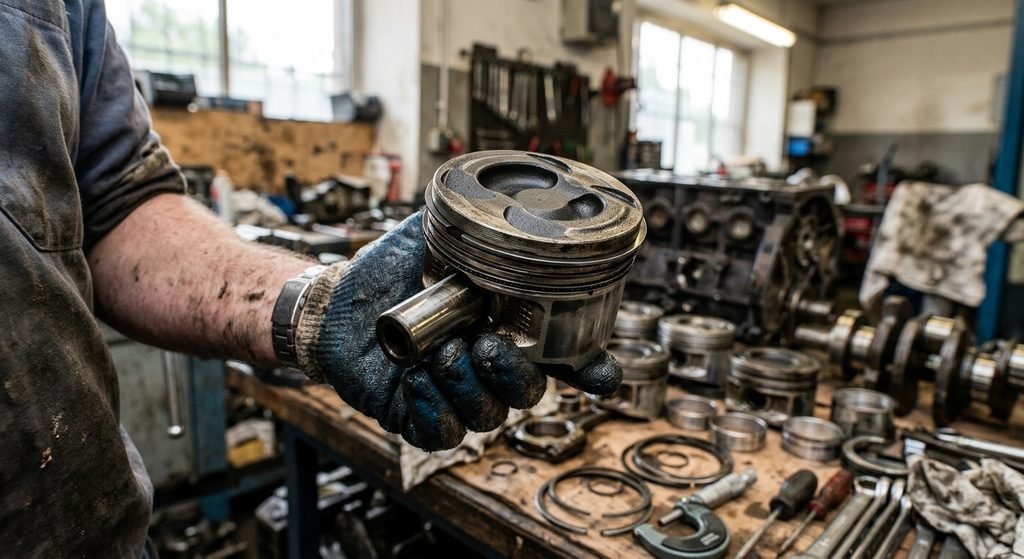
Pistons and piston rings take a lot of heat and pressure over the life of a diesel engine, and by the time they’ve worn enough to cause noticeable symptoms, the damage has usually been building for a while. Because piston and ring wear develops gradually, a lot of owners don’t catch it until fuel economy has dropped, oil consumption has crept up, or a compression test comes back low.
This guide covers the symptoms of worn pistons and rings, what typically causes the wear, and how to confirm the diagnosis before assuming you need an engine rebuild.
What Pistons and Rings Actually Do
Pistons transfer the force of combustion into rotational motion through the connecting rods and crankshaft. Piston rings seal the combustion chamber, control oil that lubricates the cylinder walls, and help transfer heat away from the piston. When rings wear or a piston is damaged, combustion pressure can leak past into the crankcase (blow-by), or oil can leak past into the combustion chamber and burn.
Common Symptoms of Worn Pistons or Rings
Blue smoke from the exhaust. This is one of the most recognized signs of oil burning in the combustion chamber, often pointing to worn rings or a scored cylinder wall.
Increased oil consumption. If you’re adding oil between changes more than you used to, worn rings allowing oil past into the combustion chamber is a common cause.
Low compression on one or more cylinders. A compression test that shows noticeably lower readings on specific cylinders often points to worn rings or a damaged piston in that cylinder.
Excessive blow-by. More crankcase pressure or more smoke coming from the breather than normal can indicate combustion gases are leaking past worn rings.
Loss of power. Since worn rings reduce cylinder sealing, the engine may not build the compression it needs to run efficiently, leading to a noticeable drop in power.
Piston slap noise. A knocking or slapping sound, particularly noticeable on cold start and fading as the engine warms up, can indicate excessive piston-to-cylinder wall clearance.
Fouled spark plugs or, on diesel, fouled glow plugs. Excess oil in the combustion chamber can contribute to fouling, though this symptom is less definitive on its own.
Since several of these symptoms can also point to valve or turbo seal issues, a compression or leak-down test is the most reliable way to confirm the problem is actually in the piston and ring area.
What Causes Piston and Ring Wear
- Normal wear over high mileage. Pistons and rings are wear items, and eventually even well-maintained engines will show wear.
- Poor lubrication. Infrequent oil changes or running low-quality oil accelerates wear on the cylinder walls and rings.
- Overheating. Excessive heat can cause pistons to expand beyond tolerance or damage ring sealing surfaces.
- Detonation or pre-ignition. Running fuel that’s inappropriate for the engine or issues with injection timing can cause abnormal combustion that damages pistons over time.
- Contaminated air intake. Dirt or debris getting past a damaged air filter can act like sandpaper on cylinder walls, accelerating ring wear.
- Excessive idling or short trips. Engines that don’t reach full operating temperature regularly can develop more blow-by and oil dilution issues over time.
How to Confirm Piston or Ring Wear
- Compression test. This measures how well each cylinder holds pressure, and consistently low readings can point to piston or ring wear.
- Leak-down test. This test is often more specific than a compression test, since it can help distinguish between a ring problem and a valve problem based on where air is escaping.
- Oil analysis. Fuel dilution or unusual wear metal readings in an oil sample can support a piston or ring wear diagnosis.
- Borescope inspection. In some cases, a borescope can be used to visually inspect cylinder walls and piston tops without fully disassembling the engine.
Repair Considerations
Depending on the extent of wear, repair options can range from a ring replacement (if the cylinder walls are still in good condition) to a full piston and ring replacement, or in more severe cases, a complete engine rebuild if cylinder walls need to be bored oversize. This is a job that typically requires the engine to be at least partially disassembled, so it’s often done alongside other wear item replacements like bearings and gaskets.
Given the labor involved, getting an accurate diagnosis before starting the job matters a lot here. Replacing pistons and rings without addressing an underlying cause, like a contaminated air intake or chronic overheating, can lead to the same wear happening again.
Common Mistakes to Avoid
- Assuming blue smoke is always a piston or ring issue without checking valve seals first, since worn valve seals can cause similar smoke.
- Skipping a compression or leak-down test and going straight to a rebuild based on symptoms alone.
- Not addressing the root cause (like a damaged air filter or overheating issue) before reassembling the engine.
- Reusing rings or bearings that should be replaced as a set rather than mixed with worn components.
Frequently Asked Questions
What does blue smoke from a diesel exhaust mean?
Blue smoke usually means oil is burning in the combustion chamber, often due to worn piston rings, valve seals, or a scored cylinder wall. A proper diagnosis can help narrow down which one.
How much oil consumption is too much?
This varies by engine, so checking your specific engine’s oil consumption specifications is the best way to know whether what you’re seeing is within a normal range or a sign of a problem.
Can worn piston rings be fixed without a full rebuild?
In some cases, if cylinder walls are still in good condition, ring replacement alone may be possible. In other cases, wear may require boring the cylinders and using oversized pistons.
Does piston slap mean the engine needs to be rebuilt?
Not necessarily on its own, but it’s worth having checked, since it can indicate excessive piston-to-wall clearance that may get worse over time.
What causes low compression in a diesel engine?
Worn rings, valve issues, or a blown head gasket can all cause low compression, which is why further testing like a leak-down test helps identify the actual cause.
How long do diesel pistons typically last?
This depends heavily on maintenance, driving conditions, and engine design, so rather than a fixed mileage, it’s more useful to watch for the symptoms above.
Final Thoughts
Worn pistons and rings develop gradually, and catching the early signs, like rising oil consumption or a drop in compression, gives you a better shot at addressing the problem before it turns into a full rebuild. If something feels off with power or oil use, a compression test is a good place to start.
Browse our PISTON AND RING CATEGORY for replacement options, or check our ENGINE PARTS CATEGORY for related components. For help confirming fitment, our team can walk you through what info you’ll need.