Knocking noise, low oil pressure, or metal in the oil filter? Here’s how to spot worn engine bearings in a diesel truck before they cause serious damage.
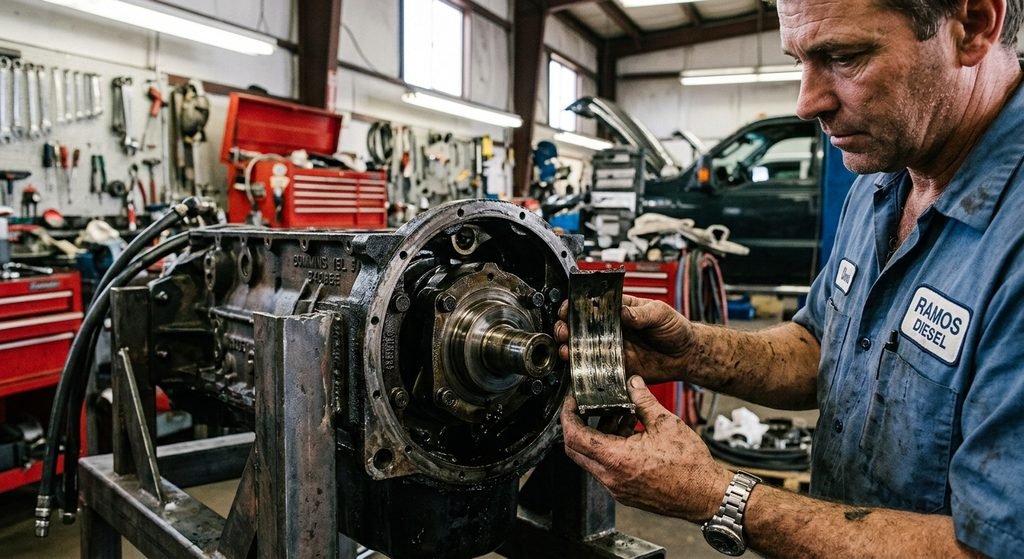
Engine bearings don’t get talked about as much as parts like injectors or turbos, but they’re one of the most critical components keeping a diesel engine together internally. Main bearings and rod bearings support the crankshaft and connecting rods, and they rely on a thin film of oil pressure to keep metal from touching metal while the engine runs. When bearings start to wear, the symptoms can escalate quickly if ignored.
This guide covers the signs of worn or failing bearings, what typically causes them to wear prematurely, and why catching this early matters more than with a lot of other diesel repairs.
What Engine Bearings Actually Do
Main bearings sit between the crankshaft and the engine block, while rod bearings sit between the connecting rods and the crankshaft journals. Both rely on pressurized oil to create a thin film that prevents direct metal-to-metal contact as the crankshaft spins. Because of the loads involved, especially on a diesel engine running high compression and torque, bearing clearances are tight and depend on consistent oil pressure and clean oil to stay protected.
Common Symptoms of Worn Engine Bearings
Knocking noise from the engine. A deep, rhythmic knocking sound, often described as sounding like marbles in a can, is one of the most recognized signs of worn rod or main bearings. It typically gets louder under load or acceleration.
Low oil pressure. As bearing clearances increase from wear, oil pressure tends to drop, since more oil can escape past the enlarged clearance rather than maintaining the protective film.
Oil pressure warning light or gauge fluctuation. Inconsistent or dropping oil pressure readings, especially at idle, can point to bearing wear allowing oil to bypass more easily.
Metal flakes or fine metal particles in the oil filter. During an oil change, finding metallic debris in the filter or on a magnetic drain plug can indicate bearing material wearing away.
Vibration that changes with engine speed. Worn bearings can sometimes cause a vibration that’s more noticeable at certain RPM ranges.
Engine seizure (in severe cases). If bearing wear goes unaddressed long enough, it can progress to the point of the crankshaft seizing in the bearing, causing catastrophic engine failure.
Because a rod knock and a lifter or valve train noise can sometimes sound similar to an untrained ear, it’s worth having a mechanic confirm the source of the noise before assuming the worst, though bearing wear should always be taken seriously given how quickly it can escalate.
What Causes Bearing Wear
- Low oil pressure or oil starvation. Anything that reduces oil pressure, including a failing oil pump, clogged pickup, or low oil level, accelerates bearing wear.
- Contaminated oil. Dirt, metal particles, or degraded oil that’s overdue for a change can act abrasively against bearing surfaces.
- Extended oil change intervals. Running oil well past its service life reduces its ability to protect bearings properly.
- Coolant contamination. If coolant mixes into the oil, from a head gasket or cooler issue, it can significantly reduce the oil’s ability to protect bearings.
- High mileage and normal wear. Even with good maintenance, bearings are wear items and eventually reach the end of their service life.
- Aftermarket tuning beyond factory limits. Pushing torque and cylinder pressure significantly beyond stock specifications can accelerate bearing wear on engines not built to handle it.
How to Confirm Bearing Wear
- Listen carefully to the noise. A mechanic experienced with diesel engines can often identify whether a knock sounds consistent with rod or main bearing wear versus another source.
- Check oil pressure readings. Comparing current readings to what’s normal for your specific engine can help identify a downward trend.
- Inspect the oil filter and drain plug for metal. This is a simple check that can support a bearing wear diagnosis, though the absence of visible metal doesn’t rule it out entirely.
- Oil analysis. Sending a sample for lab analysis can detect bearing wear metals (like copper or lead, depending on bearing material) before the wear becomes severe enough to hear or feel.
Repair Considerations
Bearing replacement typically requires significant engine disassembly, removing the oil pan and, in many cases, pulling the crankshaft or at least dropping it enough to access the bearings. Because of the labor involved, this job is often done alongside inspecting or replacing other wear items like the oil pump, since a failing pump is a common contributor to bearing wear in the first place.
Using the correct bearing size and clearance for your specific engine matters a great deal here. Bearings are manufactured in different thickness grades to match factory tolerances, and getting this wrong can lead to premature failure even with a brand new part.
Common Mistakes to Avoid
- Continuing to drive with a suspected rod knock, which risks the engine seizing or a rod breaking through the block.
- Skipping an oil pump inspection or replacement when replacing bearings, since a failing pump can cause the new bearings to wear prematurely too.
- Not measuring bearing clearances during installation to confirm they’re within specification.
- Ignoring extended oil change intervals as a contributing cause, which can lead to repeat bearing problems down the road.
Frequently Asked Questions
Can you drive with worn engine bearings?
It’s strongly discouraged. Worn bearings can progress to a seized engine or a broken connecting rod, both of which cause far more extensive damage than the original bearing repair would have.
What does a rod knock sound like?
Often described as a deep, rhythmic knocking noise that gets louder under acceleration or load, though a professional diagnosis is the best way to confirm the source.
Can low oil cause bearing failure?
Yes. Since bearings rely on consistent oil pressure and a proper oil film, running low on oil or with degraded oil is one of the most common causes of premature bearing wear.
How much does bearing replacement cost on a diesel engine?
This varies significantly based on the extent of the job and what else needs to be addressed, so it’s best to get a quote specific to your engine and situation.
Do I need to replace the oil pump when replacing bearings?
Not always, but it’s worth inspecting, since a failing oil pump is a common contributor to bearing wear and could cause new bearings to wear prematurely if not addressed.
How can I tell if it’s a bearing problem versus a lifter or valve train noise?
These can sound similar to an untrained ear, so having a mechanic listen to the engine and, if needed, check oil pressure and run diagnostic tests is the most reliable way to confirm.
Final Thoughts
Worn engine bearings are one of the more serious issues a diesel engine can develop, and catching the early signs, especially a knocking noise or dropping oil pressure, can be the difference between a bearing job and a full engine rebuild. If something sounds or feels off, it’s worth getting checked out promptly.
Browse our ENGINE BEARING CATEGORY for replacement options, or check our OIL PUMP CATEGORY for related components. For help confirming fitment, our specialists can walk you through what info you’ll need.